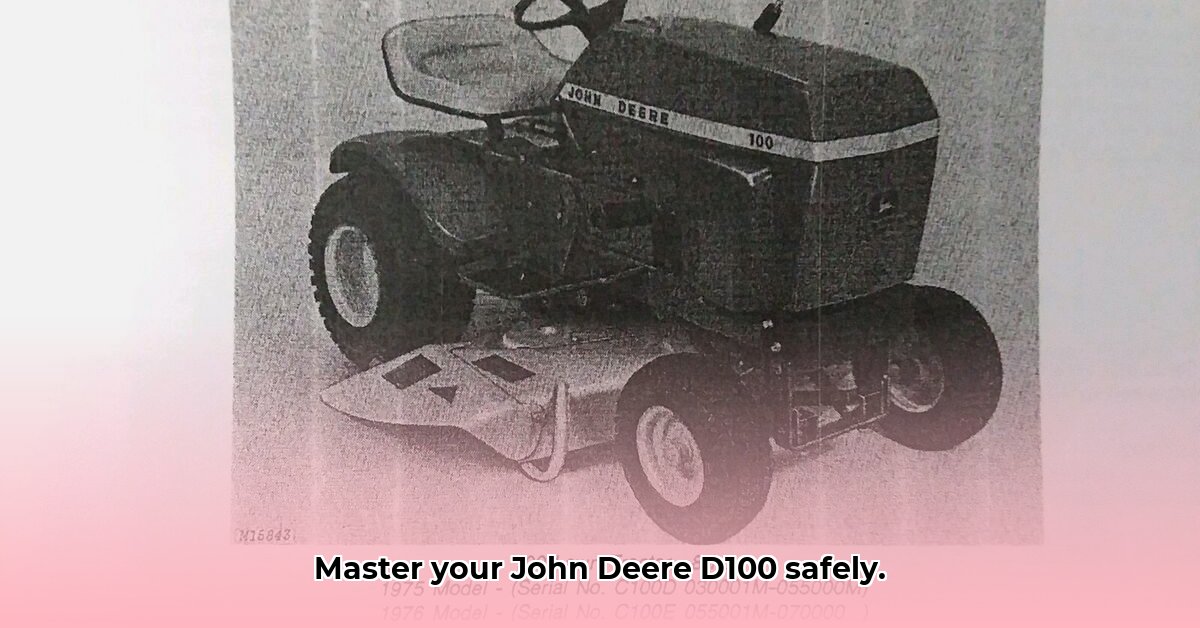
This guide provides comprehensive safety instructions for operating and maintaining your John Deere D100 lawn tractor. Following these guidelines will ensure both efficient operation and minimize the risk of accidents. Remember, safety is paramount. For information on checking other vital fluids, see hydraulic fluid check.
Pre-Operation Checklist: Ensuring a Safe Start
Before starting your John Deere D100, a thorough pre-operation inspection is crucial. This preventative step significantly reduces the risk of accidents and ensures optimal performance.
Step 1: Blade Inspection: Carefully examine the mower blades for damage (bending, dulling). Dull or damaged blades are dangerous, resulting in poor cuts and increased accident risk. Replace or sharpen as needed.
Step 2: Hardware Check: Inspect all nuts, bolts, and screws for tightness. Loose hardware can lead to malfunctions and potential injury. Tighten as needed.
Step 3: Belt Examination: Check all belts for cracks, fraying, or excessive wear. Replace worn belts immediately to prevent sudden breakdowns.
Step 4: Fluid Levels: Verify oil and fuel levels. Low fluids can damage the engine. Refuel and add oil to the correct levels, as specified in your owner's manual.
Step 5: Area Clearance: Thoroughly inspect the mowing area. Remove all obstacles (rocks, sticks, toys, debris) that could be thrown by the blades. This prevents damage to the tractor and avoids potential injuries.
Safe Operating Procedures: Responsible Mowing Techniques
Operating the D100 safely requires consistent awareness and adherence to specific procedures. Ignoring these can lead to serious consequences.
Speed Control: Maintain a safe mowing speed, adjusting for terrain variations. Avoid sharp turns at high speeds to prevent loss of control. Did you know that most lawn tractor accidents occur due to excessive speed on uneven terrain?
Passenger Restriction: Never allow passengers on the lawn tractor. This is a critical safety precaution.
Clearance Zone: Keep children and pets out of the mowing area. Maintaining a safe perimeter prevents accidental injury. How many accidents do you think could be avoided by simply establishing a clear zone?
Control Familiarity: Before operating, familiarize yourself fully with all controls. Knowing the functions of every control improves efficiency and reduces the potential for accidents. Understanding your machine is a key element of safe operation.
Blade Engagement: Handling the Rotating Blades Safely
The rotating blades are the most hazardous component of the D100. Always follow precise procedures to avoid injuries.
Start Then Engage: Start the engine before engaging the blades.
Disengage Before Stop: Disengage the blades before turning off the engine to prevent unexpected blade movement.
Maintenance Protocol: Before maintenance, ensure the engine is off and the blades are completely stopped. Allow sufficient time for complete stoppage before touching the blades.
Safe Approach: Always approach the blades cautiously, ensuring complete stillness before contact. A moment's hesitation can prevent a serious injury.
Regular Maintenance: Preventative Measures for Safety
Regular maintenance not only extends the life of your D100 but also significantly reduces the risk of accidents. This proactive approach safeguards both your safety and the performance of your equipment.
Lubrication: Regularly lubricate all moving parts to prevent wear, tear, and potential malfunctions.
Blade Sharpening: Sharp blades provide cleaner cuts and reduce the likelihood of problems or debris ejection.
Inspections: Regular inspections help identify potential issues early, preventing them from escalating into serious problems. Proactive identification of issues saves money and prevents accidents.
Fluid Monitoring: Maintain proper oil and fuel levels. Check before each use and refill as needed. Low fluid levels can lead to engine damage and even fire.
Emergency Procedures: Responding to Unexpected Situations
Despite careful operation, unexpected situations may arise. Having a plan ensures a swift and safe response.
Immediate Shutdown: If a problem occurs, immediately switch off the engine. Assess the situation calmly and systematically.
Help Seeking: If necessary, seek assistance. Don't hesitate to call for help, especially if injured. Your safety is paramount.
Regulatory Compliance: Adherence to Local and National Laws
Operating your John Deere D100 involves compliance with local and national regulations. Following these laws protects the environment and avoids legal issues.
- Local Ordinances: Familiarize yourself with all local laws and regulations concerning lawn tractor operation, including those related to noise and emissions levels. Check your local authorities for detailed information on these regulations.
Risk Assessment Matrix: Identifying and Mitigating Hazards
This matrix summarizes potential hazards and their mitigation strategies:
| Hazard | Likelihood | Severity | Risk Level | Mitigation |
|---|---|---|---|---|
| Blade Contact | High | Catastrophic | High | Pre-operation inspection; follow manual instructions; proper PPE. |
| Object Ejection | Medium | High | Medium | Clear area of debris; maintain safe operating speed; use appropriate grass catcher |
| Fire | Low | High | Medium | Regular maintenance; comply with local regulations; have a fire extinguisher. |
| Loss of Control | Low | High | Medium | Assess terrain; operate within limits; maintain machine; don't overload |
| Operator Fatigue | Medium | Medium | Medium | Take breaks; avoid operation when tired or impaired; stay hydrated. |
Remember, safe operation of your John Deere D100 requires vigilance and adherence to all safety guidelines. Consult your owner's manual for detailed instructions and specifications.